Alloy Wheel Welding
Alloy wheels are particularly vulnerable to cracking, especially when vehicles are driven over potholes, speed humps, or uneven road surfaces. While the overall rolling diameter of a wheel and tyre combination stays the same across vehicles, larger alloy wheels rely on low-profile tyres, which provide less cushioning against impacts.
Tyre sidewalls play a key role in absorbing shocks from the road. When the sidewall is thinner, it has limited flexibility, meaning more force is transferred directly to the wheel. As a result, larger alloy wheels are more prone to damage from kerbs, potholes, and sudden impacts. Even a single hard knock can lead to cracks or structural issues in both the tyre and the alloy wheel.
Spotting the Signs of Alloy Wheel Damage
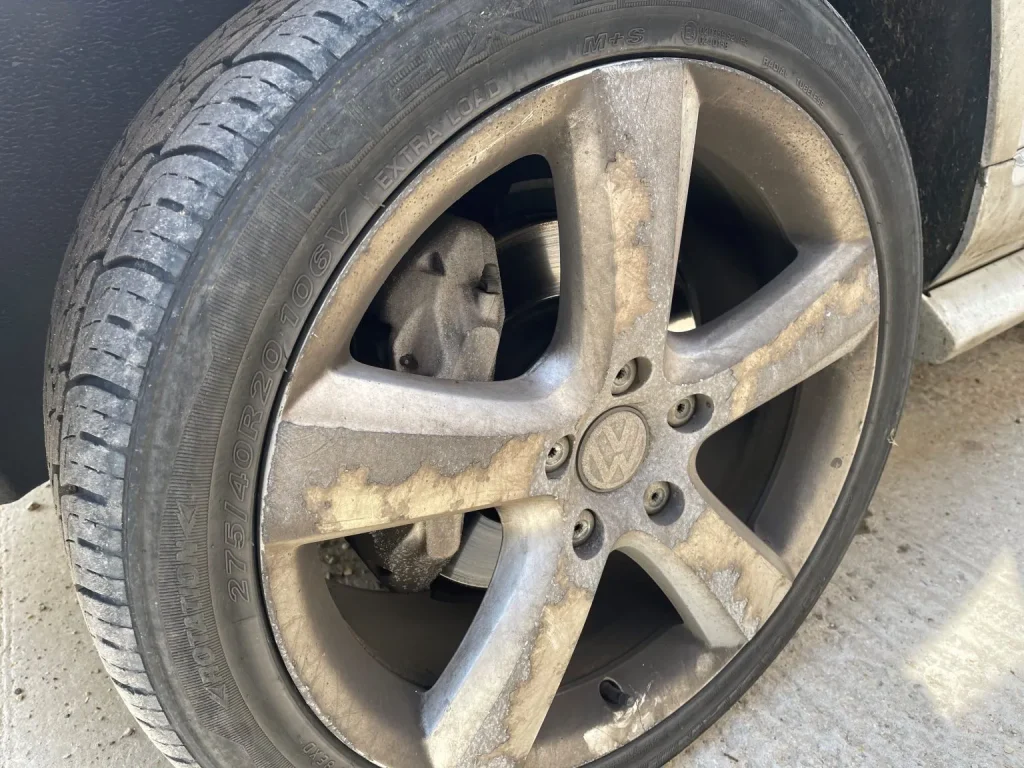
Damaged alloy wheels are often visible through cracks or bends, but there are other warning signs to watch for, such as:
- Vibrations or shaking in the steering wheel or floorboard
- Decreased braking efficiency over short distances
- Poor contact between the tyre and the road surface
- Reduced vehicle stability and handling
- Tyres losing air pressure more often than usual
Ignoring these symptoms can lead to more serious issues and significantly compromise your driving safety.
Why Choose Mobile Tyre Mates
- Professionally qualified technicians
All work is carried out by trained specialists using industry-approved methods and equipment. - Quick and efficient turnaround
We focus on delivering fast, reliable repairs while maintaining high safety and quality standards. - Reliable local service
As a local provider, we offer responsive support and a personalised service you can trust. - Repairs at a location that suits you
Alloy wheels can be collected from your chosen location and returned once repaired, usually within 24 hours. - High standards you can rely on
We are fully committed to providing precise, high-quality S.M.A.R.T repairs with attention to detail and customer care.
All repairs are carried out by trained technicians using professional equipment to ensure safe, reliable, and compliant results.
Our Process for Alloy Wheel Welding
At Mobile Tyre Mates, we use a careful, step-by-step approach to restore your alloy wheels to safe and roadworthy condition. Our skilled technicians handle every stage with precision to ensure your vehicle performs smoothly and safely after repair.
Step-by-Step Process:
- Wheel Removal: The technician begins by carefully removing the damaged wheel assembly from your vehicle.
- Tyre Removal: The tyre is then separated from the wheel to provide full access to the area needing repair.
- Damage Assessment and Marking: The technician inspects the wheel and marks the exact spots that require welding.
- Welding: Using professional-grade equipment, the damaged sections are expertly welded and refurbished to restore structural integrity.
- Wheel Balancing: After repair, the wheel is balanced to ensure optimal performance and prevent vibrations during driving.
- Tyre Inspection and Inflation: The tyre is checked for proper inflation and adjusted as needed to maintain safety and efficiency.
- Reinstallation: Finally, the wheel and tyre assembly is securely refitted to your vehicle, completing the service.
This thorough process guarantees your alloy wheels are repaired to the highest standards, ensuring safety and reliability on the road.
Affordable Alloy Wheel Welding Pricing
Our alloy wheel welding service starts at just £90 plus VAT, offering a cost-effective solution to restore your damaged wheels without breaking the bank. We strive to keep our prices competitive while delivering top-quality repairs that ensure your safety and vehicle performance.
Please note, the final cost may vary depending on the severity of the damage and any additional work needed. Every wheel repair is unique, so we’ll always provide a clear, upfront quote after a thorough inspection.
At Mobile Tyre Mates, we focus on delivering excellent value, combining affordable pricing with professional expertise to get you back on the road safely and economically
Alloy Wheel Welding: What to Expect
During alloy wheel welding, the damaged area is heated to apply the repair. While this may not be noticeable on the inner side of the wheel, any welding on the outer surface often affects the paint finish. In such cases, we advise a complete wheel refurbishment to restore its appearance fully.
FAQS
Alloy wheel welding can fix cracks, fractures, and splits in the rim that compromise the wheel’s structural integrity and safety.
Welding may alter the paint or finish on the wheel’s surface, especially on visible areas, so a full refurbishment or repaint might be recommended afterward.
The welding and repair process typically takes around 24 hours, including any necessary finishing work like balancing and inspection.
Yes, when performed by trained professionals using proper techniques, alloy wheel welding restores strength and safety to the damaged wheel, ensuring roadworthiness.